When to Start Preschool in Australia: A Parent’s Practical Guide
Choosing when to start preschool is an important milestone for every family. As a parent, you want your child to feel confident, develop friendships, explore new interests and build the skills they need for a successful start to school. But one question often comes first: What is the right age to start preschool in Australia?
The good news is that there is no single perfect age for every child. Many children begin a preschool program around the age of four, while some start earlier through three-year-old programs or early learning services. The right time depends on your child’s development, individual needs, family circumstances and the type of learning environment you choose.
In this guide, we’ll explain preschool starting ages in Australia, South Australian enrolment requirements, signs of school readiness, the benefits of early learning and how to choose the right preschool for your child.
We’ll also explore how Gatehouse Montessori supports children’s development through its Montessori approach at its Hope Valley and Rosewater centres in Adelaide.
What Age Do Children Usually Start Preschool in Australia?
Most Australian children attend a preschool program in the year before they begin full-time school. This is commonly around four years of age, although the exact starting age depends on the state or territory and the child’s date of birth.
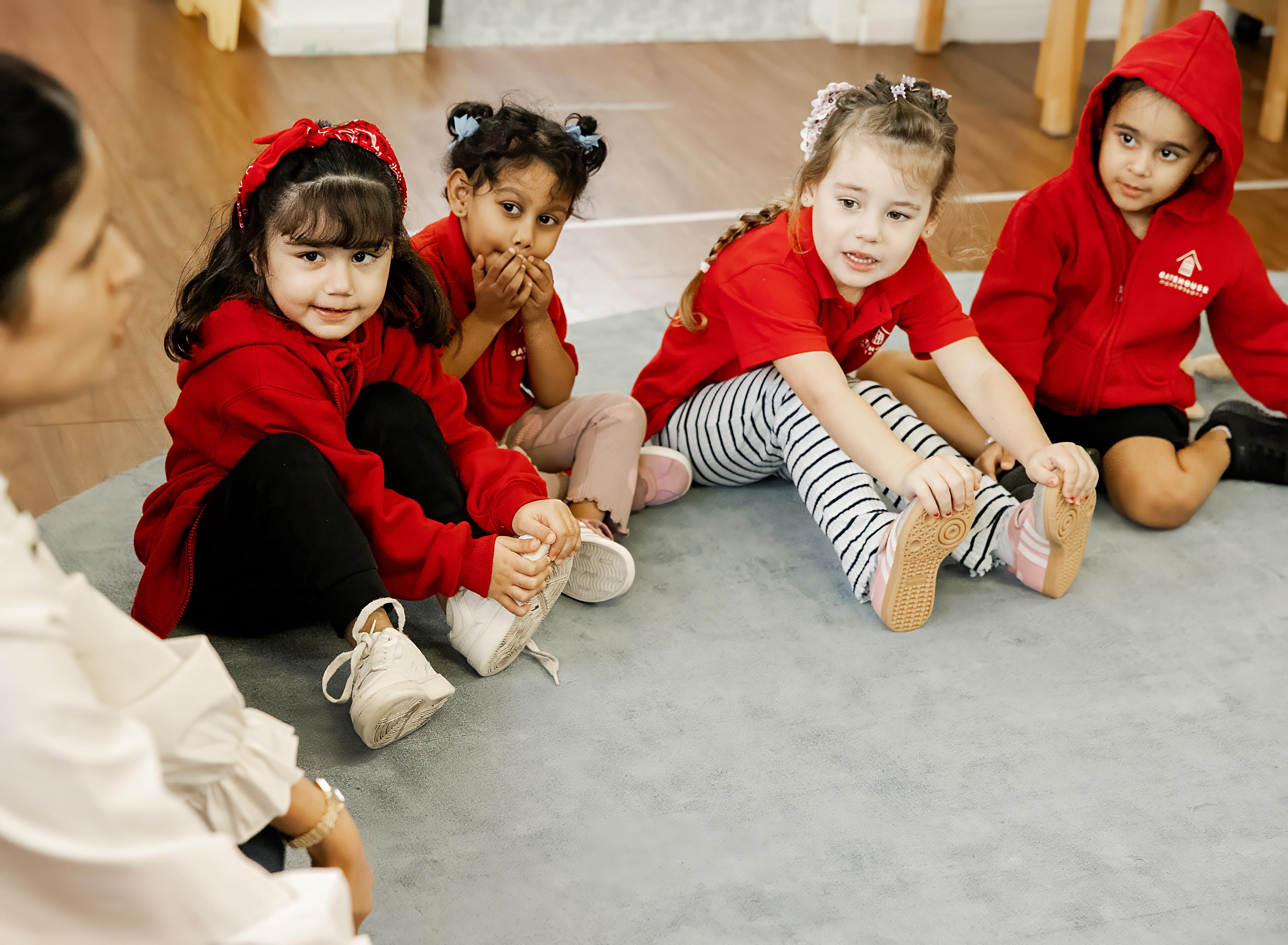
Preschool is an early childhood education program where children learn through play, exploration, practical experiences and social interaction. Qualified early childhood educators help children develop communication, independence, problem-solving and early literacy and numeracy skills.
The Australian Government’s preschool funding framework has a national benchmark of at least 600 hours of quality preschool education each year for children in the year before school, equivalent to approximately 15 hours per week.
Some states are also expanding access to preschool programs for three-year-olds, giving families more opportunities to introduce structured early learning before their child’s final preschool year.
It’s important to understand that attending an early learning or childcare centre before the year-before-school program is different from being eligible for a government-funded preschool entitlement.
Preschool Ages and Enrolment Rules Across Australia
Preschool terminology and enrolment arrangements differ across Australia. Some states use the terms kindergarten or kindy, while others use preschool.
Here’s a general overview:
- New South Wales: Preschool programs are commonly available to children aged three and four. Kindergarten is the first year of primary school.
- Victoria: Three-year-old and four-year-old kindergarten programs are available. Prep is the first year of school.
- Queensland: Kindy is generally offered in the year before Prep, with eligibility based on the child’s birth date.
- Western Australia: Kindergarten is generally for four-year-old children, followed by Pre-primary.
- South Australia: Preschool and kindergarten mean the same thing. Children generally access their year-before-school preschool program around age four, with specific starting dates based on their birthday.
- Tasmania: Kindergarten is generally available to children aged four before they begin Prep.
- Australian Capital Territory: Preschool is generally available for four-year-olds before Kindergarten.
- Northern Territory: Preschool is available before Transition, the first year of formal schooling.
These are general descriptions rather than individual enrolment decisions. Always check the relevant state education department for current eligibility and intake dates.
When Can Your Child Start Preschool in South Australia?
For Adelaide families, understanding South Australian preschool eligibility is particularly important.
Under the South Australian Department for Education’s year-before-school arrangements:
- Children who turn four before 1 May can generally start preschool at the beginning of that year.
- Children who turn four between 1 May and 31 October can generally start through the mid-year intake at the beginning of Term 3.
- Children who turn four after 31 October generally become eligible at the beginning of the following year.
South Australia is also progressively introducing universal preschool for three-year-olds in government preschools between 2026 and 2032. Availability depends on the location and rollout schedule.
Families considering a private or long day care early learning service should contact the individual centre to understand its age requirements, program structure, fees and availability.
For the latest eligibility information, visit the South Australian Department for Education’s official preschool enrolment website.
Signs Your Child May Be Ready for Preschool
Age is important, but developmental readiness also deserves attention.
Some children are excited to explore new environments and meet other children. Others need more time and reassurance before feeling comfortable away from home.
Here are some common signs that your child may be ready for an early learning environment.
1. Interest in Other Children
Your child may enjoy watching other children, playing alongside them, sharing toys or beginning simple group activities.
2. Growing Independence
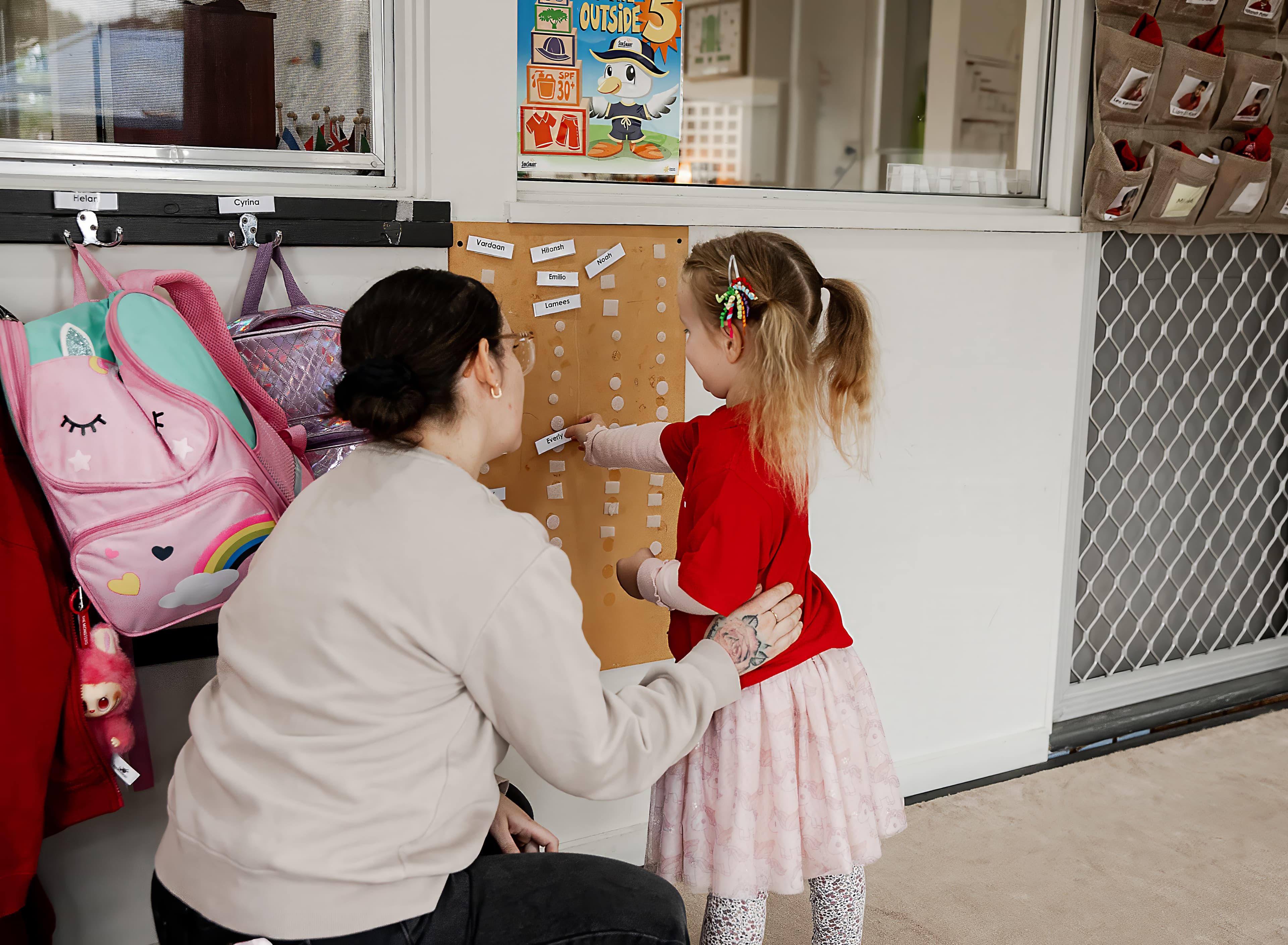
Your child may be starting to feed themselves, put away toys, wash their hands or attempt simple everyday tasks with some assistance.
3. Communicating Their Needs
Your child may use words, gestures or other forms of communication to express feelings, ask for help and communicate basic needs.
4. Curiosity and Exploration
Showing interest in books, puzzles, drawing, building activities, nature and new materials can indicate a growing readiness to explore a learning environment.
5. Becoming Comfortable With Simple Routines
Following simple instructions, participating in everyday routines and moving between activities with support can help children adjust to preschool.
6. Managing Short Periods Away From Parents
Some children gradually become comfortable spending time with familiar carers or educators. This confidence can develop through gentle, positive experiences.
Remember that these are not strict entry requirements. Every child develops differently, and children do not need to master every skill before beginning preschool.
A supportive early learning environment should help children develop these abilities rather than expect them to arrive already fully independent.
Why Quality Preschool Matters for Your Child’s Development
The early years provide important opportunities for children to develop the foundations for future learning.
A quality preschool or early learning environment offers much more than supervision. It provides meaningful experiences that encourage children to discover their interests, build relationships and develop confidence.
Some important benefits include:
Language and Communication
Stories, conversations, songs and group activities introduce children to new vocabulary and encourage them to express their thoughts and ideas.
Social and Emotional Development
Playing with other children helps develop cooperation, patience, empathy, sharing and the ability to manage different emotions.
Independence and Confidence
Everyday activities encourage children to make choices, complete simple tasks and develop confidence in their own abilities.
Early Literacy and Numeracy
Letters, sounds, counting, sorting, matching and hands-on activities introduce important concepts in enjoyable and meaningful ways.
Concentration and Problem-Solving
Puzzles, creative activities and practical tasks encourage children to focus, explore possibilities and work through challenges.
School Readiness
Children gradually develop the communication, independence, concentration and social skills that can support their transition into primary school.
The quality of the learning environment and the relationships children build with educators are just as important as the number of hours they attend.
How Montessori Education Supports Preschool-Age Children
Not every child learns in exactly the same way. Some enjoy group activities, while others prefer exploring independently, repeating tasks and learning through hands-on experiences.
This is one reason many Australian families explore Montessori education.
The Montessori approach recognises children as capable learners who develop at their own pace. Rather than directing every activity, educators prepare an environment where children can make choices, explore learning materials and gradually develop independence.
At Gatehouse Montessori, this philosophy is central to how children learn and grow.
How Does Gatehouse Montessori Work?
Gatehouse Montessori follows an authentic Montessori approach at its Hope Valley and Rosewater centres in Adelaide.
The learning environment is carefully prepared to encourage curiosity, concentration, independence and practical life skills.
Instead of expecting every child to complete the same activity at the same time, educators observe children’s interests and developmental stages, introduce appropriate learning materials and provide individual guidance.
Here are five important areas of the Gatehouse Montessori curriculum:
1. Practical Life
Children participate in everyday activities such as pouring, transferring, sorting, dressing, cleaning and caring for their environment.
These simple experiences develop coordination, responsibility, concentration and independence.
2. Sensorial Learning
Children explore colours, shapes, textures, sizes, sounds and other sensory experiences through specialised Montessori materials.
These activities help develop observation, comparison and early reasoning skills.
3. Language Development
Through stories, conversations, songs, phonetic activities and language materials, children develop vocabulary, listening skills, communication and early literacy.
4. Mathematics
Hands-on Montessori materials introduce counting, quantities, number relationships, sequencing and early mathematical thinking.
5. Culture and Discovery
Children explore the natural world, geography, science, plants, animals and the wider environment, encouraging curiosity and an appreciation of the world around them.
Alongside its Montessori curriculum, Gatehouse Montessori incorporates Australia’s Early Years Learning Framework (EYLF), supporting children’s development through a recognised national early childhood learning framework.
What Does a Typical Day Look Like at Gatehouse Montessori?
A child’s daily experience plays a major role in helping them feel comfortable, confident and engaged.
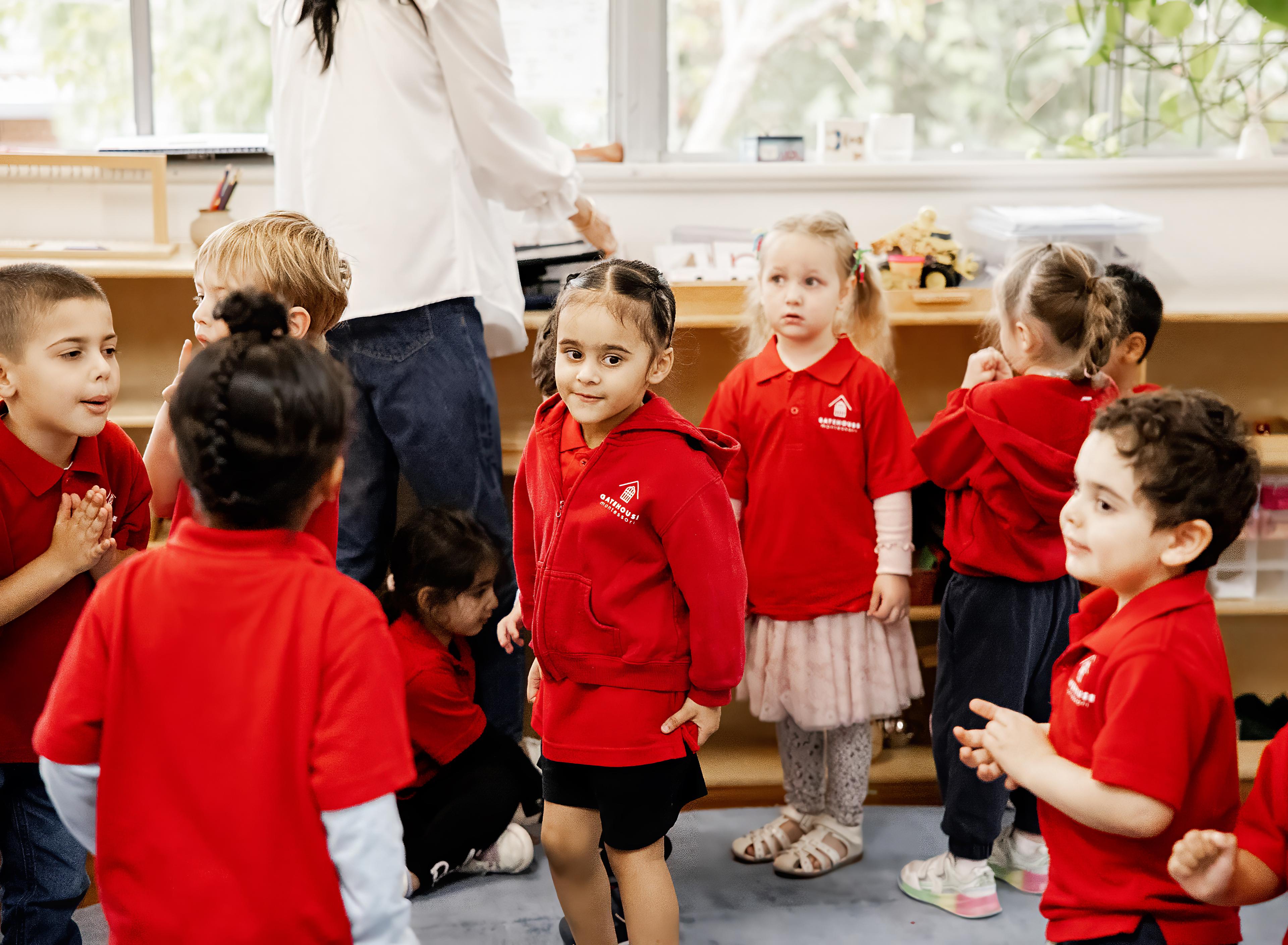
At Gatehouse Montessori, the day is designed around meaningful learning experiences, familiar routines and opportunities for children to explore.
Here’s what families can expect from the daily approach:
A Warm Welcome
Educators greet children individually and help them settle into the environment. Familiar faces and gentle routines help create a sense of belonging.
Uninterrupted Montessori Learning
Children have opportunities to select purposeful activities and work with Montessori materials at their own pace. Educators introduce activities, observe progress and offer guidance when needed.
Practical Activities and Outdoor Experiences
Children participate in everyday tasks, environmental care and outdoor play. These experiences help develop coordination, responsibility and an understanding of their surroundings.
Language, Mathematics and Creative Exploration
Throughout the day, children engage with activities that develop early academic foundations, creativity, communication and problem-solving.
Rest and Individual Support
Children’s individual needs are considered throughout the day, including opportunities for rest, transitions and support from educators.
Gatehouse Montessori offers a full-day program from Monday to Friday, 7:30 am to 6:00 pm, alongside its core Montessori learning cycle from 9:00 am to 3:30 pm.
The aim is to create an environment where children feel secure, respected and encouraged to become confident learners.
Why Families Choose Gatehouse Montessori in Adelaide
Choosing an early learning centre is a personal decision. Parents want a place where their children feel safe, develop meaningful relationships and receive the right support as they grow.
Gatehouse Montessori provides families with two centre locations, each following the same Montessori foundations.
Gatehouse Montessori Hope Valley
Located at 8 Yarrow Crescent, Hope Valley SA 5090, this centre welcomes children aged 2½ to 6 years.
It offers a smaller, mixed-age Montessori environment where children can explore learning materials, develop independence and learn alongside children at different stages of development.
Gatehouse Montessori Rosewater
Located at 35–39 McGregor Terrace, Rosewater SA 5013, this purpose-built Montessori centre welcomes children aged 18 months to 6 years.
Its learning environment provides opportunities for hands-on Montessori activities, social development, outdoor experiences and individual learning.
What Makes the Gatehouse Approach Different?
Families exploring Gatehouse Montessori can expect:
- A child-centred Montessori learning philosophy.
- Carefully prepared classrooms and hands-on learning materials.
- Mixed-age learning environments.
- Individual observation and guidance from educators.
- A focus on independence, concentration and practical life skills.
- Five curriculum areas covering Practical Life, Sensorial, Language, Mathematics and Culture.
- A learning approach incorporating the Early Years Learning Framework.
- Opportunities for parents to visit, observe and understand their child’s learning environment.
At Gatehouse Montessori, parents are also valued as partners in their child’s learning journey. Communication and regular conversations help families understand their child’s development, interests and experiences.
The goal is not simply to prepare children for their first day at school. It is to help them develop the confidence, curiosity and independence that support lifelong learning.
How to Prepare Your Child for Their First Day of Preschool
Starting preschool is a big change for both children and parents. A little preparation can make the transition more comfortable.
Here are some practical steps to try at home.
1. Talk Positively About Preschool
Explain that preschool is a place to play, learn, explore and meet new friends. Keep conversations simple and encouraging.
2. Read Books About Starting Preschool
Picture books about new environments, friendships and daily routines can help children understand what to expect.
3. Encourage Independence at Home
Allow your child to try simple activities such as putting away toys, washing hands, choosing clothes and feeding themselves.
4. Establish Familiar Routines
Consistent sleeping, waking, mealtimes and play routines can help children adjust to a new daily schedule.
5. Practise Short Separations
If your child is comfortable, introduce short periods with trusted family members or carers to gradually build confidence.
6. Visit the Centre Before Enrolment
A centre visit allows your child to explore the environment, meet educators and become familiar with the surroundings.
7. Communicate With Educators
Share information about your child’s interests, routines, comfort needs and any concerns. This helps educators provide more appropriate support.
Remember, settling into preschool is a process. Some children adjust quickly, while others need additional time and reassurance.
How to Choose the Right Preschool in Adelaide
Before choosing an early learning centre, take the time to compare different options.
Here are some important questions to consider:
- What age groups does the centre accept?
- What educational philosophy does it follow?
- Are educators appropriately qualified?
- How does the centre support individual development?
- What does a typical day look like?
- How does the centre manage settling-in periods?
- What opportunities are available for outdoor play?
- How are parents informed about their child’s progress?
- What are the operating hours and fees?
- Is the service eligible for the Child Care Subsidy?
You can also check a service’s assessment and rating information through the Australian Government’s StartingBlocks website.
Most importantly, arrange a visit. Seeing the environment, observing educator interactions and asking questions can help you decide whether a centre feels right for your child.
Frequently Asked Questions About Starting Preschool in Australia
1. What is the best age to start preschool in Australia?
Many children begin their year-before-school preschool program at around four years of age. However, some children can access earlier programs from age three, depending on state eligibility and individual centre arrangements.
2. Can a three-year-old attend preschool in Australia?
Yes. Some states offer three-year-old preschool programs, and many early learning centres accept children from younger ages. Eligibility and availability depend on the program and location.
3. Is preschool compulsory in Australia?
No. Preschool is not compulsory nationally. However, it provides valuable opportunities for children to develop skills before starting primary school.
4. What is the difference between preschool and childcare?
Childcare generally provides ongoing care and early learning for children while families work or manage other commitments. Preschool focuses on an educational program that helps children develop skills before school. Some long day care centres offer preschool programs as part of their service.
5. What is the difference between preschool and kindergarten in South Australia?
In South Australia, preschool and kindergarten refer to the same early childhood education program. It is generally attended in the year before children start Reception.
6. How many days a week should my child attend preschool?
There is no single schedule that suits every child. The appropriate attendance pattern depends on the program, your family’s needs and your child’s development. Consistent attendance can help children become familiar with routines and build relationships.
7. Does Montessori help prepare children for school?
Montessori education supports school readiness through practical activities, early literacy and numeracy, independence, concentration, communication and problem-solving.
8. What age can children join Gatehouse Montessori?
Gatehouse Montessori Rosewater welcomes children from 18 months to 6 years, while Hope Valley welcomes children from 2½ to 6 years. Families can contact their preferred centre to discuss availability and suitability.
9. Can parents visit Gatehouse Montessori before enrolling?
Yes. Gatehouse Montessori encourages families to book a centre tour. Parents can meet educators, explore the classrooms and understand how the Montessori learning approach works before making an enrolment decision.
10. Does Gatehouse Montessori offer full-day care?
Yes. Both centres offer a full-day program from Monday to Friday, 7:30 am to 6:00 pm, alongside the core Montessori learning cycle. Contact the centre team for current fees, availability and Child Care Subsidy information.
Give Your Child a Confident Start With Gatehouse Montessori
There is no need to rush your child’s preschool journey. The most important thing is finding an environment where your child feels comfortable, supported and encouraged to learn.
Whether your child is approaching their third birthday or getting ready for their year before school, choosing the right early learning environment can make a meaningful difference.
At Gatehouse Montessori, we believe every child has the ability to grow, explore and learn in their own way.
Through carefully prepared Montessori environments, hands-on learning activities, individual educator guidance and strong family partnerships, we work to develop independence, concentration, curiosity and confidence.
If you’re exploring Montessori early learning in Adelaide, we’d love to show you how we work.
Visit Gatehouse Montessori Hope Valley or Rosewater, meet our educators and experience our Montessori approach for yourself.
Ready to explore your child’s next learning environment?
Book a centre tour today and discover how Gatehouse Montessori can support your child’s early learning journey.
- Explore Gatehouse Montessori
- Book a Centre Tour
- Discover Our Montessori Curriculum
- Learn About Our Montessori Approach
Helpful Official Resources
- South Australian Department for Education – Preschool enrolment.
- Australian Government – StartingBlocks.
- Australian Government – Early Years Learning Framework.