How to Choose the Best Childcare in Adelaide
Choosing the right childcare is an important decision for every family. Parents want a safe, welcoming environment where their children feel comfortable, build friendships and develop essential life skills. With so many childcare options available in Adelaide, finding a centre that meets your child’s needs can take time and careful research.
The best childcare centre offers more than supervision. It provides caring educators, engaging learning experiences, safe indoor and outdoor spaces, and opportunities for children to develop confidence and independence.
Whether you are searching for childcare near your home, workplace or a particular Adelaide suburb, understanding what to look for can make your decision easier.
In this guide, we explain how to compare childcare centres, understand quality ratings, prepare for centre visits, estimate fees and choose an early learning environment that suits your family.
1. Start Your Childcare Search with Official Resources
Before visiting childcare centres, research their quality ratings, location and available information.
The Australian Government’s Starting Blocks website is a useful starting point for families comparing early childhood education and care services. You can search for services and access information to help you make an informed decision.
When researching childcare in Adelaide, consider these factors:
- The centre’s National Quality Standard (NQS) rating.
- Its location and operating hours.
- The age groups it accommodates.
- Its educational program and learning environment.
- Current vacancies and enrolment requirements.
- Daily fees and available subsidies.
You should also contact centres directly to confirm their current availability, fees and enrolment procedures.
Parent tip: Do not choose childcare based on location or advertising alone. A convenient centre is important, but the quality of everyday interactions between educators and children matters just as much.
2. Understand Childcare Quality Ratings in Australia
Childcare services approved under Australia’s National Quality Framework are assessed against the National Quality Standard.
The framework considers seven quality areas, including educational programs, children’s health and safety, staffing arrangements, relationships with children, and relationships with families and communities.
Services can receive the following overall ratings:
- Excellent: A rating awarded through a separate process to services recognised for exceptional practice.
- Exceeding National Quality Standard: The service goes beyond the standard in the required quality areas.
- Meeting National Quality Standard: The service meets the national quality requirements.
- Working Towards National Quality Standard: The service does not yet meet all the required standards.
- Significant Improvement Required: Serious concerns require substantial improvement.
A rating provides useful information, but it should not be your only consideration.
Look at the individual quality areas where information is available, particularly educational programs, children’s health and safety, and relationships with children.
During your visit, ask how the centre maintains its standards and supports children’s development.
3. Visit the Childcare Centre Before Enrolling
A centre’s website can introduce you to its facilities and educational philosophy, but visiting in person helps you understand what everyday life might look like for your child.
Arrange a tour during normal operating hours if possible. This allows you to observe the environment and see how educators interact with children.
What to Look for During Your Visit
Warm and responsive educators
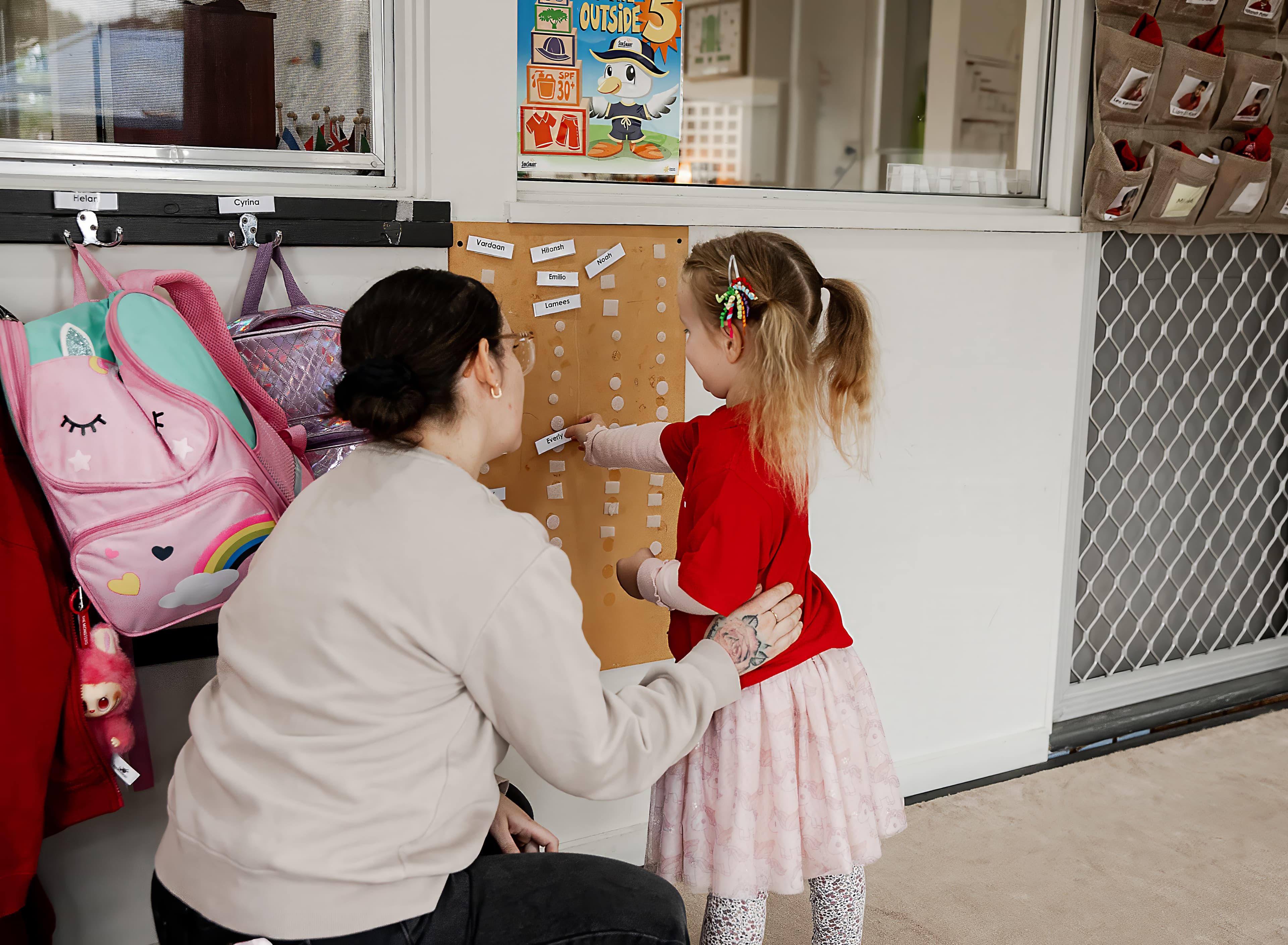
Notice whether educators speak respectfully to children, respond to their needs and encourage them to participate in activities.
Clean and organised spaces
Check whether rooms are maintained appropriately, materials are accessible and age-appropriate, and safety procedures are evident.
Engaging learning experiences
Look for activities that encourage curiosity, creativity, movement, communication and problem-solving.
Safe outdoor areas
Ask how children access outdoor play and how educators supervise activities.
Clear daily routines
Find out how the centre manages meals, rest periods, transitions and personal care.
Positive relationships
Observe whether children appear comfortable approaching educators and receiving support when needed.
No childcare environment is perfect every moment of the day. What matters is how consistently educators support children’s wellbeing, learning and individual needs.
4. Ask These Important Questions Before Choosing Childcare
Preparing questions before a centre tour can help you compare different services fairly.
Here are some useful questions to ask:
- What educational approach does the centre follow?
- What qualifications and experience do the educators have?
- What are the educator-to-child ratios in my child’s room?
- How does the centre help new children settle in?
- How are parents updated about their child’s day?
- What procedures are followed for allergies, illness and medication?
- How are children’s behaviour and emotional needs supported?
- What activities are included in a typical day?
- Are meals, nappies and sunscreen included in the daily fee?
- What are the enrolment requirements and current waiting times?
Also ask whether the centre has a regular process for communicating children’s progress and discussing any concerns with families.
The answers should be clear, practical and consistent with what you observe during your visit.
5. Compare Childcare Fees and the Child Care Subsidy
Childcare fees are an important part of choosing a service, particularly for families requiring care several days a week.
Daily fees in Adelaide vary depending on the centre, location, facilities, operating hours and program. Before using any advertised price in your budget, confirm the current fee directly with the provider.
When comparing costs, ask about:
- The standard daily fee.
- Meals, nappies and other included items.
- Enrolment or additional charges, if applicable.
- Fees for public holidays and absences.
- Payment arrangements and notice periods.
- Any discounts or applicable conditions.
Can the Child Care Subsidy Reduce Your Fees?
The Australian Government’s Child Care Subsidy (CCS) can help eligible families with approved childcare costs.
The amount a family receives depends on factors such as household income, the applicable subsidy rate, recognised activity requirements and the child’s eligible hours of subsidised care.
To understand your potential out-of-pocket expenses, use the official Services Australia Child Care Subsidy information.
You can also check the relevant payment and enrolment requirements through Services Australia and myGov.
Important: Do not compare childcare centres using their full daily fees alone. Calculate the estimated amount your family would actually pay after any applicable subsidy, and check what each centre includes.
6. Choose Childcare That Supports Your Child’s Learning
Every child has different interests, strengths and developmental needs. Some children enjoy creative activities and imaginative play, while others prefer practical tasks, building, movement or exploring nature.
A good childcare environment provides opportunities for children to develop at their own pace while receiving appropriate guidance from educators.
Play-Based Early Learning
Play-based learning allows children to explore ideas, develop language, practise social skills and solve problems through meaningful activities.
Educators support learning by providing resources, asking questions and helping children investigate their interests.
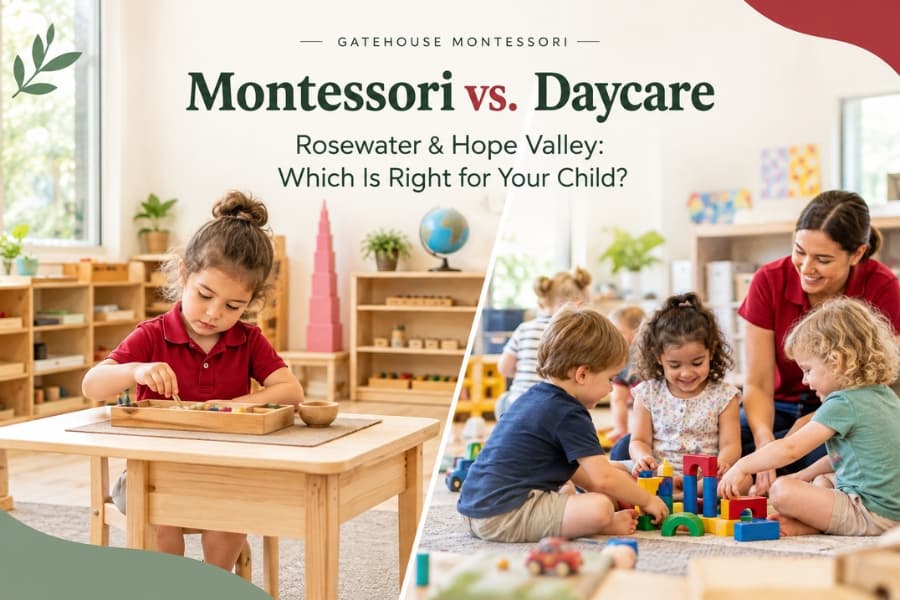
Montessori Childcare
Montessori childcare emphasises independence, concentration, hands-on learning and respect for each child’s individual development.
Children are introduced to carefully prepared learning environments and materials that encourage practical skills, exploration and self-directed activity within appropriate boundaries.
Mixed-age groupings are used in many Montessori settings, although arrangements vary between services.
Families considering this approach can explore Gatehouse Montessori, which offers early learning and childcare at its Hope Valley and Rosewater centres in South Australia.
Visit the Gatehouse Montessori website to learn more about its centres, educational approach and enrolment options.
When comparing Montessori childcare with other approaches, arrange a visit and ask educators how the philosophy is reflected in daily routines, learning activities and relationships with children.
The best approach is one that suits your child’s needs and aligns with your family’s expectations.
7. Find Childcare Near Your Home or Workplace in Adelaide
Location can make a significant difference to your family’s daily routine.
Choosing childcare close to home, work or your regular travel route can reduce commuting time and make drop-offs and pick-ups more manageable.
Adelaide families may explore childcare options in suburbs such as Hope Valley, Rosewater and surrounding northern and western areas, depending on where they live and work.
When comparing local childcare centres, consider the following:
- How long does the journey take during your usual commute?
- Are the opening and closing times suitable for your work schedule?
- Is parking or safe drop-off access available?
- Can you arrange care for the days you need?
- Are vacancies available for your child’s age group?
- What happens if you need to change your booked days?
When Should You Join a Childcare Waiting List?
It is sensible to begin researching childcare well before your preferred start date, particularly if you need specific days or infant places.
Waiting times vary considerably by suburb, age group, service and time of year. Do not assume that every popular centre has the same waiting period.
Contact several suitable services, ask about current vacancies and request information about their waiting-list process.
Joining more than one waiting list may be helpful if you have flexibility, but check whether any fees or conditions apply.
8. Check Safety, Wellbeing and Communication
Safety should be a priority when selecting childcare.
During your visit, ask how the centre manages supervision, authorised collection, emergencies, allergies, illness and medication.
You should also understand how educators support children’s emotional wellbeing and communicate with families.
Consider these questions:
- How are children supervised indoors and outdoors?
- How does the centre manage incidents and inform parents?
- What procedures are followed when a child becomes unwell?
- How are individual medical and dietary requirements managed?
- How does the service protect children’s privacy?
- How can parents raise concerns or discuss their child’s progress?
A strong partnership between parents and educators helps children feel supported as they adjust to a new environment.
Look for a centre where staff welcome questions, explain their procedures clearly and communicate respectfully with families.
9. Use This Childcare Checklist Before Making Your Decision
After visiting two or three centres, compare them using the same criteria.
| What to compare | Questions to consider |
|---|---|
| Quality rating | Does the service meet the relevant national standards? |
| Educators | Are interactions warm, respectful and responsive? |
| Learning program | Does it support your child’s interests and development? |
| Safety | Are supervision and safety procedures clearly explained? |
| Facilities | Are indoor and outdoor environments suitable for children? |
| Communication | Will you receive useful updates about your child’s day? |
| Location | Does the centre fit your family’s daily routine? |
| Fees | Are daily costs, inclusions and additional charges clear? |
| Availability | Can the centre accommodate your required days? |
| Family partnership | Do you feel comfortable discussing questions or concerns? |
There is no single feature that determines the best childcare centre for every family.
Consider the overall picture, including the quality of relationships, your child’s individual needs and how well the service fits your routine.
Frequently Asked Questions About Childcare in Adelaide
What should I look for when choosing childcare?
Look for caring educators, appropriate safety procedures, a suitable educational program, a welcoming environment and clear communication with families. Check the service’s quality rating and visit in person before enrolling.
What is a good childcare rating in Australia?
Meeting National Quality Standard or higher is a useful starting point when comparing approved services. Also consider the individual quality areas, the centre’s practices and what you observe during your visit.
How much does childcare cost in Adelaide?
Fees vary between services and depend on factors such as location, operating hours and facilities. Ask each centre for its current daily fee and use the official Child Care Subsidy information to estimate your potential out-of-pocket costs.
When should I start looking for childcare?
Start researching as early as practical, especially if you need infant care or specific days. Contact several centres to check availability and waiting-list arrangements rather than relying on a general estimate of waiting times.
Can I visit a childcare centre before enrolling?
Yes. Contact the centre to arrange a visit and ask whether you can observe the environment during normal operating hours. Prepare questions about the educational program, educators, safety, fees and settling-in process.
Is Montessori childcare suitable for every child?
Montessori childcare may appeal to families who value independence, practical learning and opportunities for children to explore activities at their own pace. Every child is different, so visiting a Montessori centre can help you decide whether its approach suits your family.
How can I find childcare near Hope Valley or Rosewater?
Search the official Starting Blocks website by suburb, compare available services and contact centres directly. You can also explore local providers, including Gatehouse Montessori’s Hope Valley and Rosewater centres, to learn about their programs and current enrolment options.
What is the difference between childcare and preschool?
Childcare commonly refers to early childhood education and care services that support children’s learning and wellbeing while providing care for working and other families. Preschool generally refers to an early learning program intended to prepare children for school. In Australia, the exact arrangements and age groups vary between services and jurisdictions.