How Montessori Childcare Prepares Your Child for Primary School Early
Many parents look for childcare that does more than keep children safe and happy during the day. They want their child to be ready for the next big step — primary school. Montessori childcare focuses on building the exact skills children need for a confident start.
In a Montessori setting, children learn independence, concentration, self-care and early academic foundations through hands-on activities. These skills develop naturally over time and help many children settle more easily into the routines and expectations of primary school.
This guide explains how Montessori childcare supports school readiness in a clear and practical way. It is written for Australian parents, including those looking at options in Hope Valley, Rosewater and the wider Adelaide area.
What School Readiness Really Means
School readiness is not only about knowing the alphabet or counting to 20. Primary schools look for children who can:
- Manage basic self-care (toileting, opening lunchboxes, putting on shoes)
- Follow simple instructions
- Concentrate for short periods
- Get along with other children
- Show curiosity and willingness to try new things
Montessori childcare works on all these areas from an early age through the prepared environment and daily routines.
Building Independence Through Everyday Tasks
One of the strongest features of Montessori childcare is the focus on independence. Children are given real tools and real tasks that match their size and ability.
Examples include:
- Pouring water or milk
- Preparing simple snacks
- Sweeping, wiping tables and packing away
- Dressing themselves and managing buttons or zips
- Choosing their own work and returning materials to the shelf
These activities may look simple, but they build confidence and the belief that “I can do it myself.” When children start primary school, they are often more ready to look after their own belongings, follow classroom routines and ask for help when needed.
Developing Concentration and Focus
Primary school requires children to sit, listen and complete tasks. Montessori classrooms support this through uninterrupted work cycles. Children choose an activity and can stay with it for as long as they remain interested.
Over time, this builds the ability to concentrate. Educators observe and gently guide rather than constantly directing the group. Many parents notice their children become better at finishing what they start and focusing on one thing at a time.
Practical Life Skills That Transfer to School
Practical Life is a core part of Montessori childcare. These are everyday activities that teach care of self, care of the environment and grace and courtesy.
Children practise:
- Hand washing and personal care
- Food preparation and cleaning up
- Moving carefully and carrying objects
- Saying please, thank you and solving small conflicts politely
These skills make the transition to school smoother. A child who can open their lunchbox, pack away after an activity and move around a classroom with care often feels more capable from the first day.
Early Literacy and Numeracy Foundations
Montessori does not push formal academics too early. Instead, it builds strong foundations through hands-on materials.
In language, children work with sandpaper letters, movable alphabets and storytelling. They connect sounds with symbols and begin constructing words when they are ready.
In mathematics, materials such as number rods, beads and counting activities help children understand quantity, sequence and basic operations through touch and movement.
These experiences support the early literacy and numeracy expectations of Australian primary schools while keeping learning enjoyable and pressure-free.
Social Skills in Mixed-Age Groups
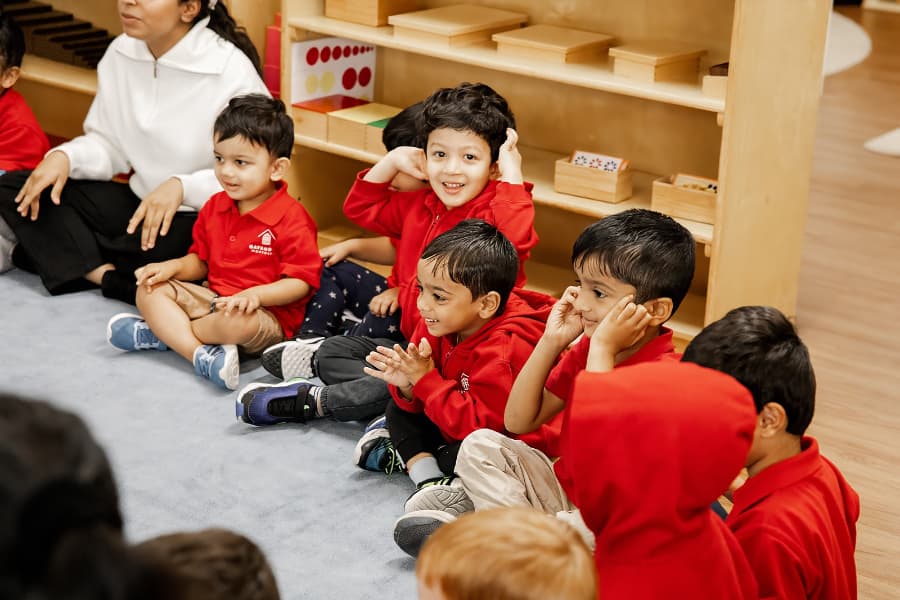
Montessori classrooms usually group children across a three-year age span. Younger children learn by watching older ones. Older children practise leadership and empathy by helping younger peers.
This mixed-age setting builds real social skills — sharing, waiting, helping and resolving small disagreements. These abilities help children form friendships and work with others when they start primary school.
How Montessori Fits Australian Early Learning Standards
All approved early learning services in Australia follow the Early Years Learning Framework (EYLF) and the National Quality Framework. Montessori childcare aligns well with these standards.
The EYLF outcomes focus on identity, wellbeing, connection to the world, confident learning and effective communication. Montessori supports these through independence, practical activities, concentration and respectful relationships.
Centres such as Gatehouse Montessori in Hope Valley and Rosewater operate as approved long day care services. They combine authentic Montessori practice with the requirements of the Australian system, including Child Care Subsidy for eligible families.
What the Transition to Primary School Often Looks Like
Children who have attended Montessori childcare often arrive at primary school able to:
- Manage their own belongings
- Follow multi-step instructions
- Concentrate during group times and independent work
- Interact respectfully with peers and teachers
- Approach new learning with curiosity rather than anxiety
Of course, every child is different. Some adapt quickly; others need more time. The goal of Montessori is not to make every child the same, but to give them a strong foundation of independence, confidence and love of learning.
Parents can support the transition by continuing simple independence routines at home and talking positively about the new school.
Montessori childcare prepares children for primary school by focusing on real-life skills, concentration and self-motivation from an early age. For many families in Hope Valley, Rosewater and across Adelaide, this approach offers a calm, purposeful start to the learning journey.
FAQ
Does Montessori childcare really help with school readiness?
Yes. It builds independence, concentration, self-care and early academic foundations that many children use when they start primary school.
Will my child struggle in a traditional primary school after Montessori?
Most children adapt well. The independence and focus they develop often help them settle into new routines.
What age does Montessori childcare start preparing children for school?
Preparation begins early through practical life activities and grows stronger in the years leading up to school entry.
Is Montessori only about academics?
No. It focuses equally on social skills, emotional regulation, physical coordination and a love of learning.
How is Montessori different from regular daycare for school preparation?
Montessori places stronger emphasis on independence, long periods of concentration and purposeful hands-on materials, while still providing care and play.
Can I visit a Montessori centre to see school readiness in action?
Yes. Booking a tour lets you observe the environment, materials and how children work independently.