Child Care vs. Montessori: What’s the Best Choice for Your Toddler?
Choosing early education and care for a toddler is one of the biggest decisions many Australian parents face. The search often starts with “child care near me” and quickly leads to questions about Montessori. Is Montessori just a fancy version of daycare, or is it genuinely different? Which is better for a toddler’s development, independence and school readiness?
There is no single “best” answer that suits every family. Both quality traditional child care and authentic Montessori programs can support children well. The right choice depends on your child’s temperament, your family’s values, practical needs (hours, location, cost) and the quality of the specific centre you are considering.
This guide explains the real differences so you can make a clearer decision.
Quick Overview – The Core Difference
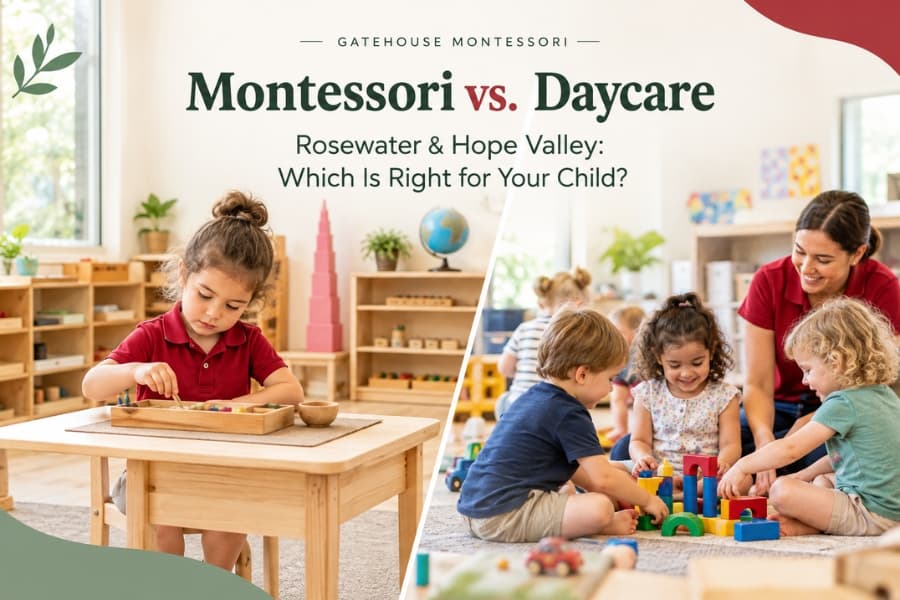
Traditional long day care (often simply called child care or daycare) is typically adult-led, with age-grouped rooms, planned group activities and a structured daily routine aligned to the Early Years Learning Framework (EYLF).
Montessori child care is child-led within a carefully prepared environment. Children choose their own activities from specialised materials, work at their own pace for longer uninterrupted periods, and usually learn in mixed-age groups. Educators act more as guides and observers than directors of group lessons.
Both can be high quality. Both can be CCS-approved in Australia. The daily experience for the child feels quite different.
How Traditional Child Care Usually Works
In most long day care centres:
- Children are grouped by age (babies, toddlers, preschoolers).
- Educators plan themes or group activities.
- There is a clear daily schedule with set times for play, meals, rest, outdoor time and group learning.
- Toys and resources are often bright, plastic and varied.
- The focus is on safe care, socialisation, play-based learning and meeting EYLF outcomes.
- Many centres also deliver approved preschool/kindergarten programs in the year before school.
This structure works well for many families. It provides predictability, strong social opportunities and the longer hours that working parents often need.
Read also: Preschool Near Me Adelaide | How to Choose the Right One

How Montessori Child Care Works
In an authentic Montessori environment (especially for toddlers and preschoolers):
- Classrooms are mixed-age (for example, 18 months–3 years or 3–6 years).
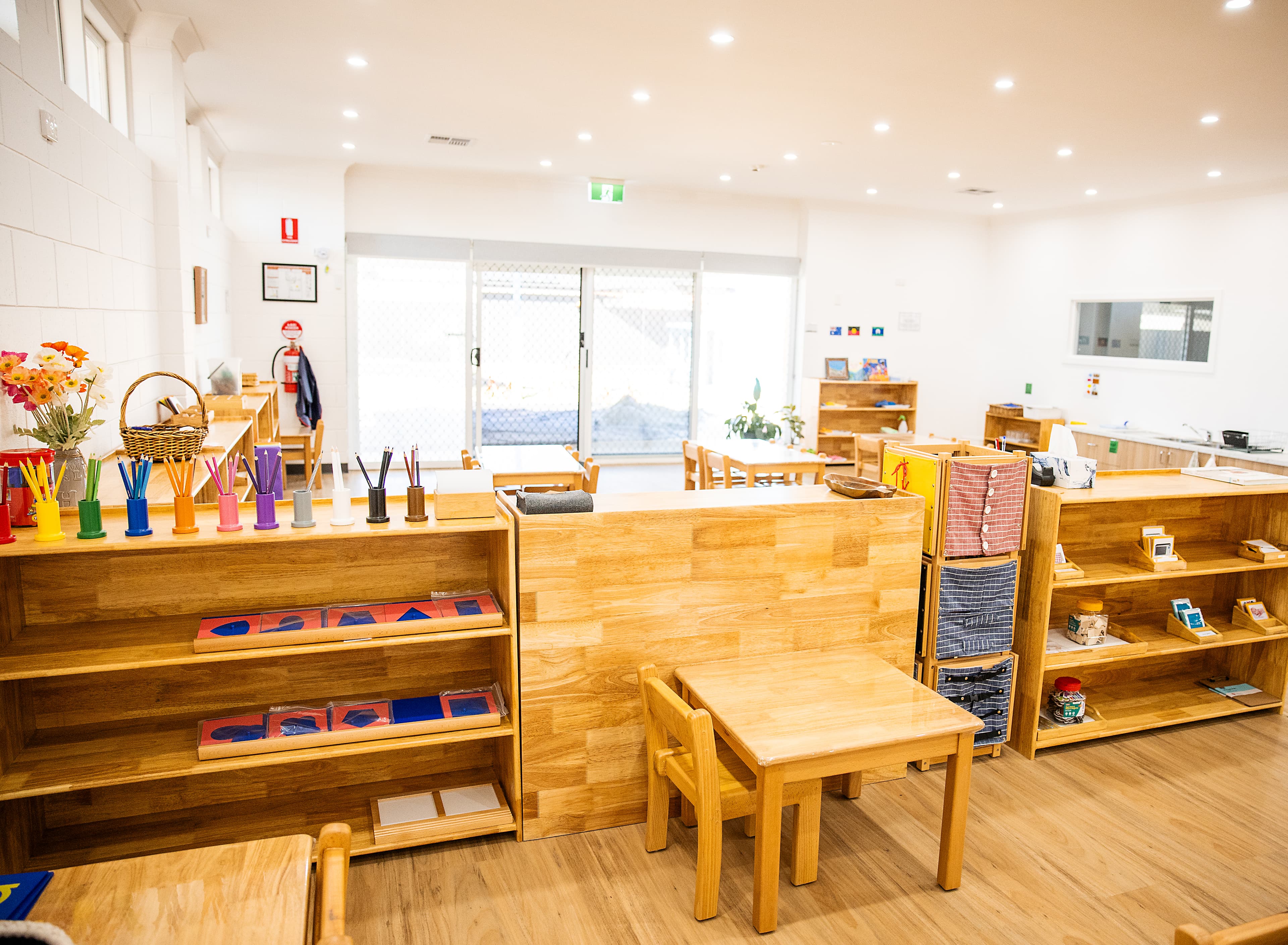
- The room is a “prepared environment” with low shelves, natural materials and carefully sequenced activities.
- Children choose their work and can concentrate for longer periods (the “work cycle”).
- Practical life activities (pouring, cleaning, food preparation, dressing) are central — they build independence, coordination and confidence.
- Educators present materials individually or in small groups, then step back to observe.
- The atmosphere is generally calmer and more ordered than a typical daycare room.
Montessori is not just “child-led free play.” The materials and environment are highly intentional. The goal is to support the child’s natural drive to learn and become independent.
Many Australian Montessori centres also follow the Early Years Learning Framework and are assessed under the National Quality Framework, so they meet the same regulatory standards as other approved services.
Side-by-Side Comparison
| Aspect | Traditional Child Care | Montessori Child Care |
|---|---|---|
| Grouping | Same-age rooms | Mixed-age groups |
| Daily structure | Educator-led schedule & group activities | Longer child-chosen work cycles |
| Educator role | Leads activities and group times | Prepares environment, presents, observes |
| Materials | Toys, craft, themed resources | Specialised sequential Montessori materials |
| Focus | Play, socialisation, care + learning | Independence, concentration, practical life |
| Pace | Group pace | Individual pace |
| Environment | Often colourful and busy | Ordered, calm, natural materials |
Quality varies widely in both approaches. A well-run traditional centre can be excellent; a poorly implemented “Montessori-inspired” room may not deliver the real method.
Cost Considerations in Australia
Fees for Montessori long day care are often similar to, or only moderately higher than, quality traditional centres in the same area. Both are usually eligible for the Child Care Subsidy (CCS), which significantly reduces the out-of-pocket cost for most families.
Exact fees depend on location, inclusions (meals, nappies, etc.) and the centre’s pricing. Always ask for the daily rate before subsidy and use the Services Australia estimator for your family situation. Some Montessori centres are all-inclusive; others may have additional charges. Compare total expected gap fees rather than headline daily rates alone.
Which Approach Suits Which Child?
Montessori often appeals to families who value:
- Independence and self-motivation
- Calm, ordered environments
- Children learning practical life skills early
- Individual pace rather than group timing
It can work especially well for toddlers who are ready to explore materials with focus, or for children who prefer quieter, more purposeful activity.
Traditional child care can be a strong fit when:
- Your child thrives on group activities and social energy
- You need maximum flexibility in hours
- You prefer a more structured, adult-guided day
- Availability or location is the priority
Many children do well in either setting if the educators are warm, consistent and responsive. Temperament matters more than the label.
How to Decide and What to Look For
- Visit more than one centre of each type.
- Observe the atmosphere: Are children engaged and calm, or restless? How do educators speak to children?
- Ask about staff qualifications, ratios, and (for Montessori) specific Montessori training.
- Check the ACECQA National Quality Standard rating on Starting Blocks.
- Notice the materials and whether children can freely access them.
- Ask how the centre supports independence, toileting, mealtimes and settling.
- Consider practical factors: location, hours, waitlist, and real cost after CCS.
If you are drawn to the Montessori approach, look for centres that use authentic materials, mixed-age groups and trained guides rather than simply using the name.
In Adelaide, Gatehouse Montessori offers this approach at two centres — Hope Valley (smaller, capped group) and Rosewater (purpose-built, from 18 months). Both provide full-day care within a Montessori framework and are CCS-approved. A tour is the best way to see whether the environment feels right for your toddler.
FAQs
What is the main difference between child care and Montessori?
Traditional child care is usually adult-led with age groups and structured group activities. Montessori is child-led within a prepared environment, using specialised materials and mixed-age groups.
Is Montessori better than regular daycare?
Not inherently. Both can be excellent. Montessori emphasises independence and individual pace; traditional care often emphasises group socialisation and structured routines. Quality and fit for your child matter most.
Does Montessori cost more in Australia?
Often similar to quality long day care in the same area. Both can attract Child Care Subsidy. Compare actual gap fees after subsidy.
From what age can children start Montessori?
Many centres accept toddlers from 18 months or 2 years. Some offer programs from younger ages.
Is Montessori only for gifted children?
No. It is designed for the normal developmental path of all children and supports a wide range of learning styles and paces.
How do I know if a centre is real Montessori?
Look for mixed-age groups, specialised materials on low shelves, trained Montessori educators, and longer uninterrupted work periods. Ask about training and visit to observe.